Featured

The Rain

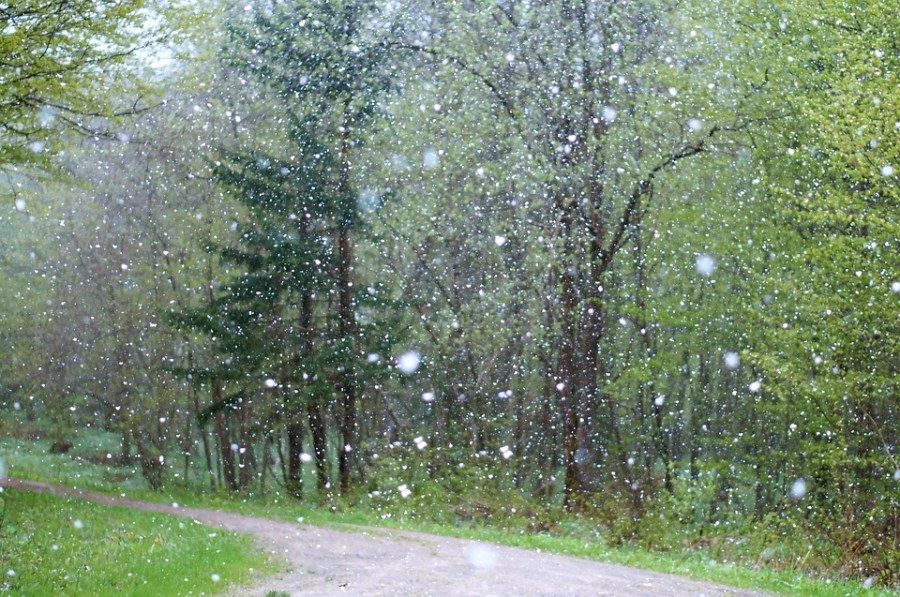
The canvas of our tent echoed as rain splattered our shelter. The rain came lightly at first, like whispers. Then torrents struck the tent—and the rain went on for days.

I loved it.

John and I were safely ensconced inside our tent. Outside, as the rain fell, the river, which was only a few yards away, rose by the hour—we knew we weren’t going to catch our dinner in that roaring torrent. Instead, we played Uno, poker, talked, and listened, closer to the elements than we could ever be inside hard walls.

We wondered, occasionally, when it would end… tomorrow? The next day? We checked periodically for holes in our tent, for damp spots on the tent floor, but the pouring rain didn’t stop our vacation adventure. The rain became an escapade in its own right, rising and falling in intensity, filling our ears with its pounding and with the river’s passing thrust. Inside our cozy tent we played on, and then we slept.

I love the rain. In California when I was growing up, rain came rarely. The first rain of the season always mixed with oils on the roads to create slick conditions; forgetful drivers, who didn’t slow down, skidded into one another, creating a flood of accidents. In summer, thunderstorms struck with ferocity, lightning crisscrossed in the sky, thunder rolled, and streets flooded, losing all that good water to gutters and sewage systems.Pixabay no attrib req lightning-1158027_960_720
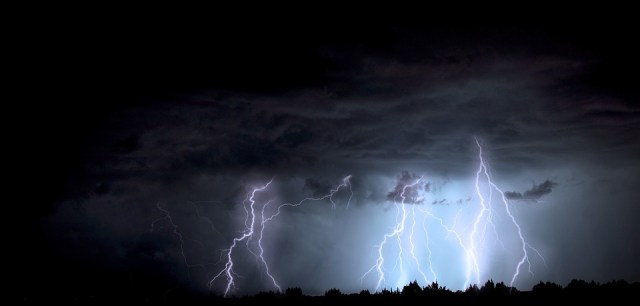
Rain in California washed the muck that stuck to smog smothered trees off the leaves and onto the ground, transforming the grey green trees into the deep green of healthy vegetation. Rain introduced Petrichor and ozone into the atmosphere—filling the air with a clear, natural perfume. Negative ions amassed.

Today, we are going on two weeks of nearly daily rain here in Indiana, yet I still love the rain. Tonight I sat outside on my porch, listening to the rain begin, feeling the rising wind just before the rains came, smelling that familiar scent, watching the first drops land upon the plants in my front flower beds.

I tire of overcast days; I need bursts of sunshine and the long sunny days that intersect the rainy season during springtime here in Indiana and make it gleam. But I also love the rain because it is the nurturer that brings on flowers, softens the soil, makes the grass grow, and caresses the world into spring. And I also love spring.

Tonight, the rain has stopped. Flowering trees drip, losing water droplets and clinging blossoms. The sky glows from the horizon to its topmost reaches with a golden pink light. Soft clouds reflect the setting sun’s rays. Vegetation quivers, shaking off excess moisture, readying itself to burst further into bloom. Green grass glimmers.

Rain seems so common. Ubiquitous. Certain. But there, our instincts are wrong.

All over the world, the climate is changing. Yes, it’s true—the four warmest years on record have all occurred in the last decade. According to Climate Central, “2018 was the second-warmest year on record without an El Niño event, behind only 2017.” Scientists know that if we do not address climate change, if we do not prioritize the need for a biologically diverse world, if we do not live more sustainably, nothing is certain.

None of the things that we love.

Not even the rain.
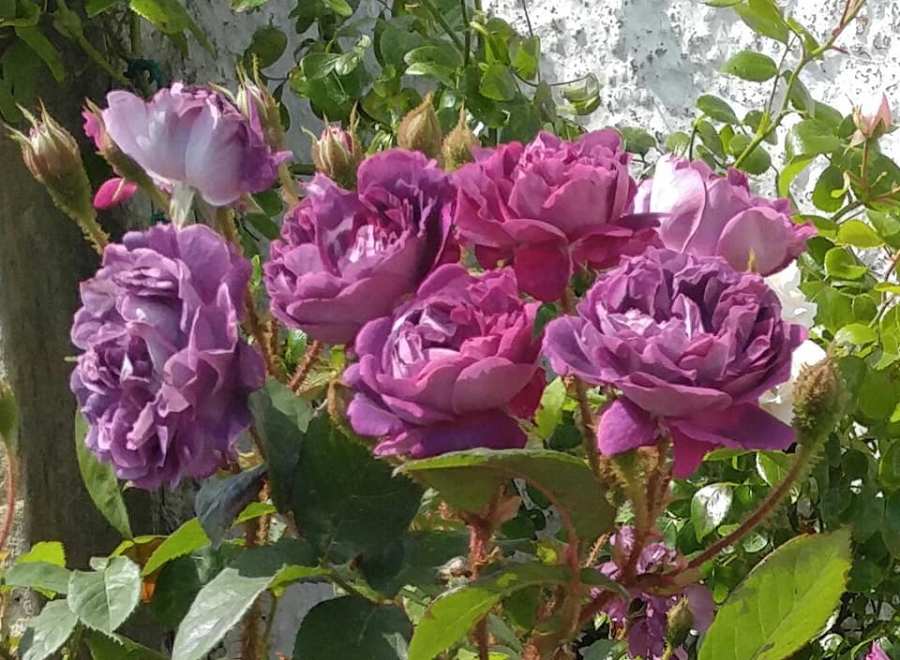
God’s Immanence in a Rose: Reflections from New Year’s Day

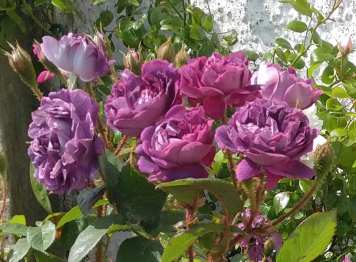
Scotland 12 37217421_10212201409055299_7486753352756232192_nAt the Rose Parade, flowers reign. For those unversed in parade rules–every surface inch on every float—from huge twirling elephants to the image on the elephant’s IPad—must be covered in natural materials–dried stretched seaweeds, tea leaves, cranberry seeds, corn, beans, or rice. Herbs like cumin and cloves. Carnations, mums, daisies, orchids, bird of paradise flowers, and half a million or more roses. No artificial plant materials or coloring are allowed—nature’s colors are dramatic enough.

New Year’s Day, to me, always means the Rose Parade. Watching in 2019, its 130th anniversary, the parade of floats evoke the sublime!

I lived in Pasadena, the Parade’s home, for six crucial years of my life. I attended Pasadena City College for one year (before transferring to Occidental College nearby), worshipped at a Pasadena church, met and married my husband in Pasadena, graduated from Fuller Seminary in Pasadena, and stood on Colorado Boulevard watching the Rose Parade as often as I could.

One year when I was a child, my dad packed my sister and I into our VW bus, drove to Pasadena, parked near the parade route, and staked out a viewing place while my sister and I struggled to sleep in the van. The overnight celebrations on the parade route are lively. We didn’t sleep much. By the time we found our spot and the parade began, I could barely keep my eyes open.

I’ve camped in the van, slept on the sidewalk to get a seat at the curb, stood behind deep rows of crowds to catch parade glimpses, and sat in the bleachers (once).

Many of my pivotal life memories occurred in this city that dedicates its parade to roses—a parade that reminds me how much poorer the world would be without flowers.

To me, God shows up in flowers.

God as transcendent, who exists above Creation, and God as immanent, who can be met through Creation, join harmoniously in the theology that guides my life. As St. Patrick put it:

I arise today, through God’s strength to pilot me,

God’s might to uphold me,

God’s wisdom to guide me….

I arise today, through the strength of heaven,

The light of the sun,

The radiance of the moon….

To the Christian academic and writer C. S. Lewis, beauty—like music or the scent of a rose—serve as a metaphor of our longing for Heaven. In his sermon “The Weight of Glory,” Lewis wrote:

The books or the music in which we thought the beauty was located will betray us if we trust to them; it was not in them, it only came through them, and what came through them was longing…. For they are not the thing itself; they are only the scent of a flower we have not found, the echo of a tune we have not heard, news from a country we have never yet visited.

God present in the world He has made. Through it, God hinting at a world we have not yet seen. God present in roses—even at the Tournament of Roses.

One more reason to protect the flora and fauna of this world.

My Love Affair with Scotland

I’m in a love affair with Scotland. I lived there for three years thirty years ago, and in the intervening years, I’ve returned thirteen times.

This past summer, I spent five weeks in Scotland: exploring Edinburgh anew, a city of turrets and spires; revisiting Midlothian where our family resided; rambling through coastal villages in Fife; visiting my sister, her husband, and dear friends; and feasting on visions of “drystane dykes” (stone walls without mortar) and rolling vistas descending to the Firth of Forth.

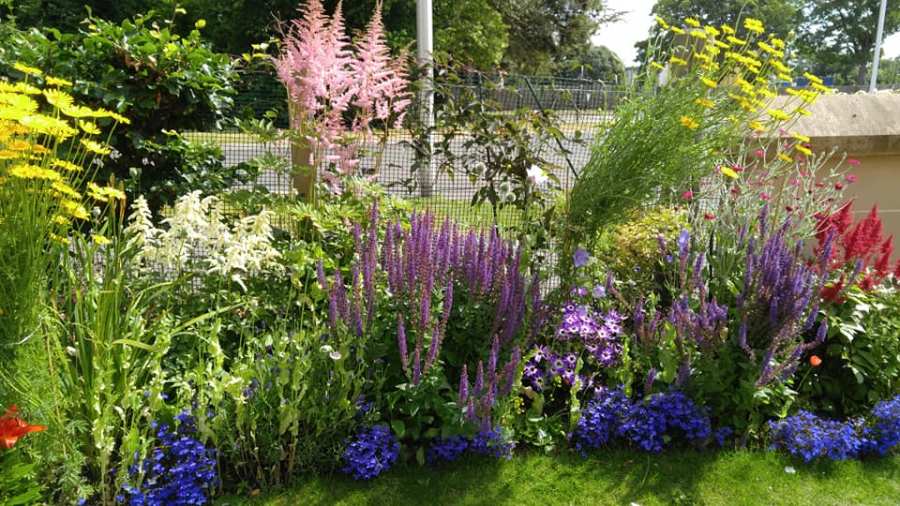
The skies were clear blue; flowers–roses, fuchsia ‘trees,’ lavender, and poppies, all at their peak–overflowed pots and beds.

And the golf courses and hillsides—unexpectedly—were turning from their usual emerald green to yellow-gold and then to shades of brown, far too early for this predictably rainy country.

One of Scotland’s well-known, humorous postcards is divided into four boxes, each containing one of the four seasons: winter, spring, summer, and fall. Each box pictures a sheep standing in the rain—winter snow/rain, spring rain, summer rain, and fall rain.

“Welcome to Scotland, where the seasons don’t matter” says a joke.

When it rains in Scotland, people just get on with it.

Rain has made Scotland a haven for flower lovers, like me, and a go-to-place for a lot of golfers. (It’s a country of only 5.3 million people, but Scotland boasts 550 golf courses!) It is not known as a go-to-place for a summer tan. But it was this year.

This year—the summer of 2018–the seasons mattered. During the five weeks I was there, it rained only twice.

Scotland’s churches celebrate harvest Sunday in September. But this summer, Scotland’s farmers started harvesting in mid-July.

On June 28th, Glasgow, Scotland, topped 91.7 degrees—the second highest temperature ever recorded anywhere in Scotland. The BBC reported that “The ‘weatherproof’ membrane on Glasgow Science Centre’s roof melted and dripped black ‘goo’ down the building” because of the heat—Scotland, like many other places, isn’t prepared for such temperatures.

In a report from the Met Office (the people behind British weather forecasts), “there has been a general increase in summer temperatures averaged over the country as a result of human influence on climate, making the occurrence of warm summer temperatures more frequent.” And they add, “Every region of the UK is forecast to see average summer temperatures rise by around three degrees over the next 60 years.”

Scotland wasn’t alone in experiencing such a summer. During the first week of July, in the north, from Siberia to Canada–and across the rest of the globe—the planet baked.

Scientists from both NASA and the National Oceanic Atmospheric Administration (NOAA) have said that “17 of the 18 warmest years since modern record-keeping began have occurred since 2001.” Seriously.

As the Washington Post said, “No single record, in isolation, can be attributed to global warming. But collectively, these heat records are consistent with the kind of extremes we expect to see increase in a warming world.”

Scotland 11 37534591_10212238571584339_3993478377280372736_nA warming world could be considered good news for those who want Scottish suntans. It could portend trouble, though, for Scottish golf courses, bird life, fisheries, flowers, and farmers.

The Scientific community has agreed that humans are playing a leading role in climate change. They do not and will not agree on how fast it is warming, the extent of our species’ role versus other causes, or the specific consequences of climate change. Science doesn’t work this way. Science hypothesizes and tests out theories to get nearer to good conclusions. But thousands of experiments have led to their consensus that climate change is real, dangerous, and an emergency the whole world must address intentionally. Now.

Scotland is determined to be one of the countries taking the lead. According to the Scottish government, they plan to “reduce greenhouse gas emissions by at least 90% by 1950.”

All of Scotland’s efforts won’t be enough, though, unless the rest of the world—including the United States—is on board.

Friends, we need to vote out anyone who says they don’t believe in climate change. We need to vote in those who acknowledge it and plan to do something about it. We need to stand with local, state, and federal agencies that are making climate change a priority. We need to get on board, and we need to get our country on board, as well.

I want to still see pots and beds that are bulging with flowers, and fields that are emerald green, on my next visits to the Scotland that I love.