
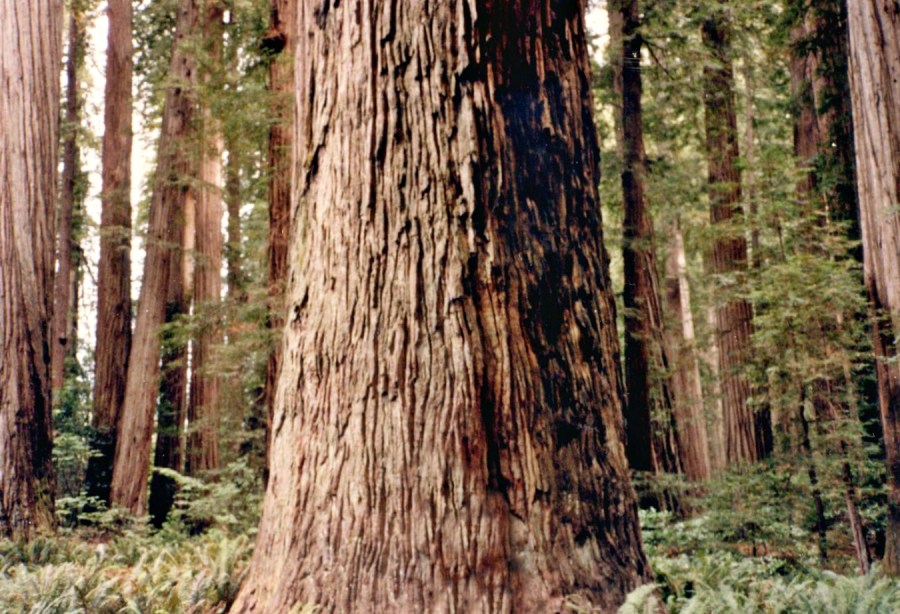
In The Lord of the Rings, Tolkien’s Ents battled ferociously when Saruman and his orcs, acting like a vicious “planetary disease” sought to uproot and chop the ancient Fangorn Forest to extinction. Ripping free from their stupor the Ents fought heroically, heaving rocks and loosing floods, until they ended the destruction.
Ent giants, Middle Earth’s trees unchained. In Tolkein’s story, the Ents were the trees’ shepherds; they would fight deforestation to the end.
Our earth’s trees are sessile, tethered by roots. In our world, if trees are to have shepherds to fight their destruction, those shepherds will have to be us.
A few years ago, the giants in Indiana were heavily breeding. Our silver maple let loose thousands of spinning seedlings, and I regretfully became the tree’s adversary as I plucked hundreds of new born maples from their successful implantations in my lawn. Ash trees lining our street were dense with seeds clusters. Sycamores in the woods bulged with pods.
I asked a tree expert, a state employee whose job involved growing trees used to repopulate forests deforested by industry, if something was up.
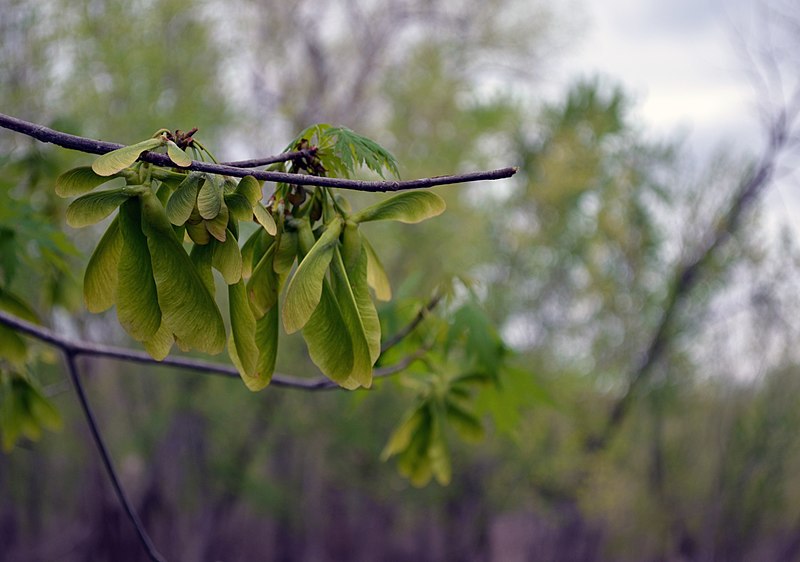
By USFWSmidwest https://www.flickr.com/
photos/49208525@N08/13985429209/, Public Domain, https://commons.wikimedia.org/
w/index.php?curid=61073572
He explained: Silver maples were seeding madly statewide. To protect their kind, when trees sense danger, some varieties bear offspring in far greater quantities than usual. That year, they were doing this throughout Indiana. They knew something. Two past summers, hot with drought, had killed trees throughout the state. A long cold winter gave warning.
Giants communicating with giants in voices unheard. Instinct urging. The trees listened, acted, wise with the centuries’ accumulated wisdom. Better go all out this year, they whispered. The future is precarious. They understood: even giants risk extinction.
The most majestic tree giants that I have seen are the huge redwoods of my native California. We visited them as a family when my sister and I were children, and I felt the awe such trees inspire. The California coast hosts the largest remaining virgin redwood forest in the world, with 2,500 year old trees. They are the tallest trees on earth. Massive at their base, redwoods are planted firmly on wide set legs, sufficient to hold each tree’s towering form.
We build buildings that emulate the shape of those tree trunks.
But even giant redwoods are disappearing. According to the 2018 State of the Redwoods Conservation Report, this region along the California coast once boasted 2.2 million acres of tall, old growth redwoods, a forest in existence since the age of the dinosaurs. Now, due to factors such as rapid logging since California’s gold rush in the 1840s, the old growth forest has shrunk to a meagre 113,000 acres.
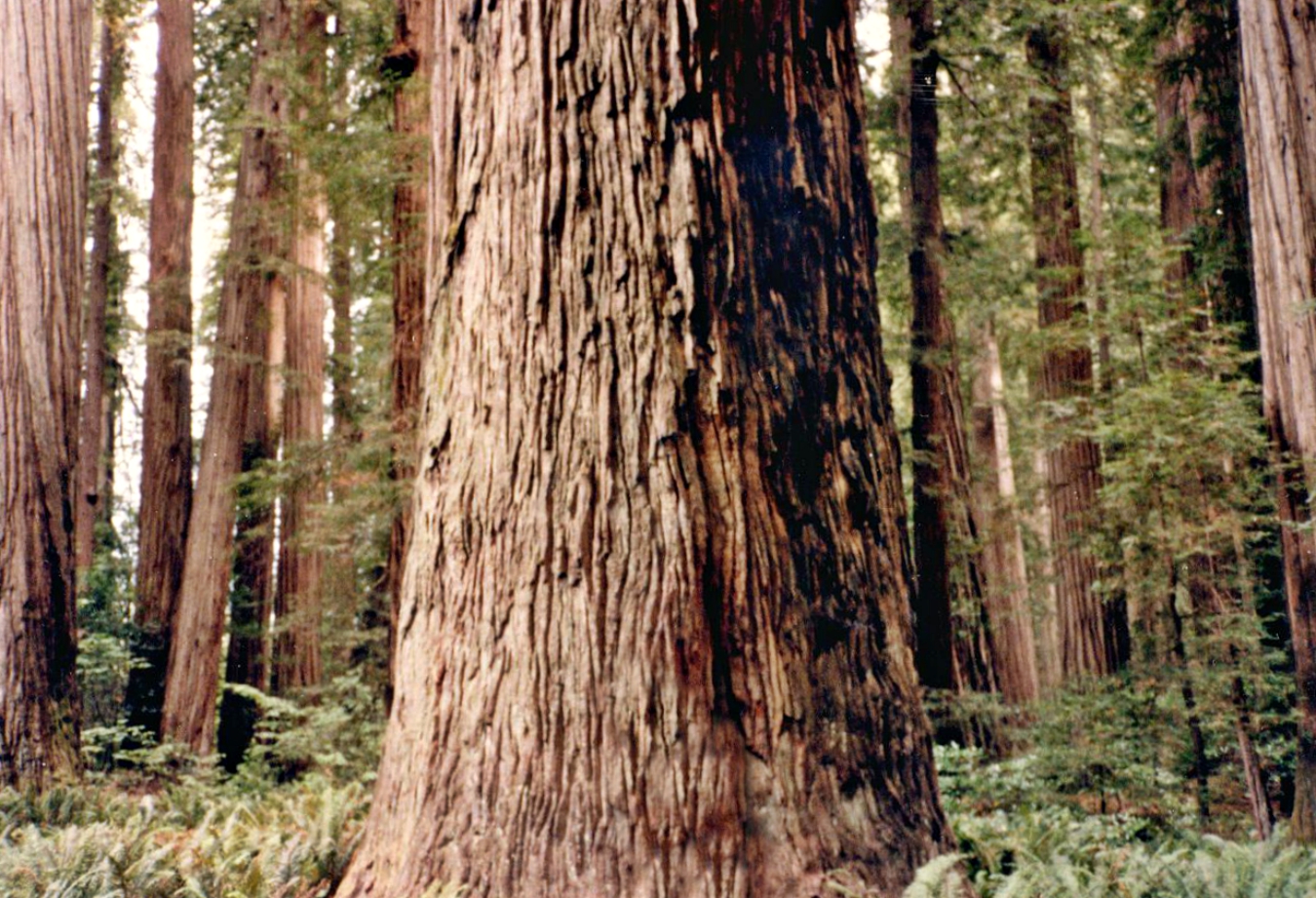
Tragically, these “arboreal giants” are also being attacked by poachers. Much like the big animals of Africa—the elephant and rhinoceros—giant redwoods have been murdered for economic gain. Poachers with chain saws extract redwood burls—some nobs, burls with beautiful, swirling patterns—weigh hundreds of pounds. Even when the tree survives, the New York Times reports that “removing a burl cuts into a tree’s living cambium layer, which can weaken it and make it vulnerable to insects and disease.” [Follow this link to a storyboard showing the destruction.]
Tethered, the redwoods have no recourse but to stand proud and endure when they are attacked—no running for them. Brave and determined forest rangers (tree shepherds!) are closing roads and trying to stop the poachers—but too frequently, more trees are defaced.
California’s recent fires have also put redwoods at risk, fires made more likely by human-induced climate change. California’s redwood forest has been designated a world heritage site. But like sites situated in war zones or stressed by uncontrolled human encroachment, even these giants risk extinction.
Across the globe trade wars, which can lead big consumers to burn more woodlands to cultivate additional crops, further imperil the Fangorn forests of this world.
Nature has a well-honed instinct for survival. I’ve seen trees at the brink of a riverside cliff, clinging by root threads to rocks and sand, living, growing, persistent. I’ve seen ancient trees like the ponderosa pine, because of its relative inaccessibility and, of improbable benefit, unattractiveness, doggedly surviving.
Living creatures are tenacious. Seeds proliferate, survive, and sprout. Trees hold on, gripping, digging their roots deeper, wider. Life clings, hopes.
But nature is vulnerable, as well. Fragile.
In our world, where humankind has so often imitated Saruman and his orcs, acting like “planetary diseases,” our ancient forests are under attack.
We cannot count on trees unchained. We are the trees’ shepherds.
It is up to us to fight for the survival of the giants of this world. We must rise from our own stupor and do battle, for even giants risk extinction.
[Part two: “How to Battle Like the Ents” will be published soon. For more on Man: A Planetary Disease, go the Ian L. McHarg’s 1971 B. Y. Morrison Memorial Lecture.]

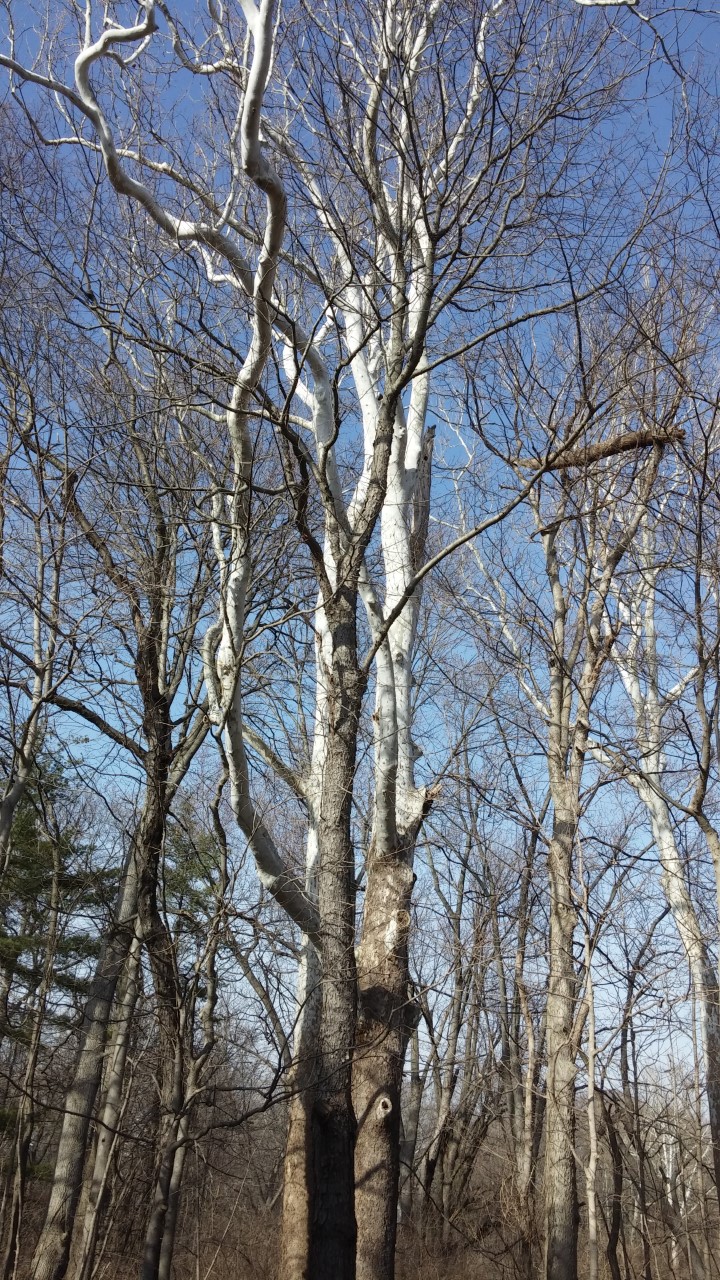 Forest fragments are also prone to further parcelization, as the wood behind my house illustrated. Fragmentation can lead to permanent land use changes, requiring more political activism to preserve what remains.
 Pine Scent Blog