

I sometimes feel so discouraged by the groaning of this lovely blue and green planet that I succumb to negativity. And then I feel worse.
Rather than just feeling ashamed of my own poor environmental practices, or angry about the abject failure of people in power to take the needs of the planet seriously, I am trying to find small ways to do things that are constructive. Something positive.
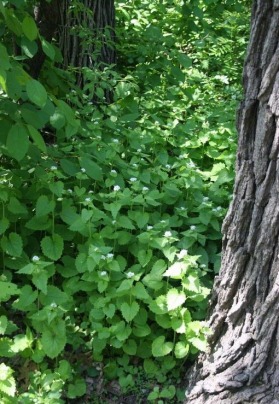
One of those involved participating in a Nature Conservancy Invasive Garlic Mustard Pull in Indiana, where I live now.
I’ve been a member of the Nature Conservancy for maybe 25 years. I love their work, and I like the way local chapters offer hands on opportunities for people to help.
A few years ago, a small group from my church joined our local chapter in its efforts to fight back against invasive garlic mustard at Cedar Bluffs near Brown County, Indiana. The Nature Conservancy now owns the Cedar Bluffs Nature Preserve, “named for the gnarled red cedar trees that cling to its cliffs” according to naturalbloomington.com, and is seeking to protect this fragile ecosystem for future generations.
Invasive plants are one of the reasons fragile environments like this need protection.
The garlic mustard plant, with its dainty white flowers, was once safely boxed in, fenced in, and contained within home herb gardens. But all that changed.
The hills and valleys of Brown County, Indiana, an hour south of my home in Indianapolis, are made of moraines left at the terminus of the glacial advance during the ice age, unlike the northern part of Indiana, which was sliced flat. Native wild flowers like wild ginger, trillium, and hepatica thrive in this undulating area.
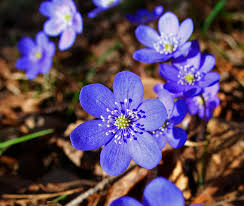
Cedar Bluffs sits amidst these moraines.
Wildflowers are so prolific at Cedar Bluffs that botany students from Indiana University visit it regularly for their studies. But this site, like so many other treasures gifted to us by this earth, could soon be lost because it is being engulfed by this simple plant, which has turned invasive.
Some conservationists speculate that as developments edged deer territory, hemming them in, deer wandered through home gardens and carried garlic mustard seeds to woods, fields, hills, and valleys. The plant has an amazing ability to self-fertilize and, unfortunately, few natural enemies in North America.
This dainty flower appears unobtrusive. Once I became familiar with it, though, I saw it everywhere–in my neighbor’s back garden, near the edges of remnant forests, and along the verges of lanes and highways. In Indiana, this little intruder has been devastating. The Nature Conservancy describes it as “one of the ten most destructive invasive species in Indiana today.”
Garlic mustard has an unexpectedly potent destructive ability. Where garlic mustard grows, all other species are crowded out. It’s like a child who, upon entering a room, begins running around knocking things over and causing sudden havoc. But in this case, garlic mustard isn’t just irritating. The havoc it causes is deadly to competing species. Nothing remains but it.
Once at Cedar Bluffs, our group set out on a small trail following a tributary of Clear Creek and then climbing up the limestone cliff with its cedar trees, rock formations, and copious undergrowth. As we walked along the bluffs our Conservancy guide showed us dozens of plants, helping us avoid crushing the native flowers while introducing us to the invader taking over their habitat.
During the garlic pull, our group filled over 20 large black garbage bags with this invasive plant. More mustard remained, but we limited its destructive potential by eliminating it in places and thinning it as best we could.
The Conservancy returns to this site year after year, in a persistent effort to salvage this bounty of native species. While the Nature Conservancy cannot stop all the ravaging done to wildlings by such invasive species, they can preserve a few of our most pristine sites.
Garlic mustard is only one of a numbers of invasive plants taking over across the country. Our action against it was just one small step for nature and biodiversity.
It was, however, something positive that I could do.
 Pine Scent Blog